
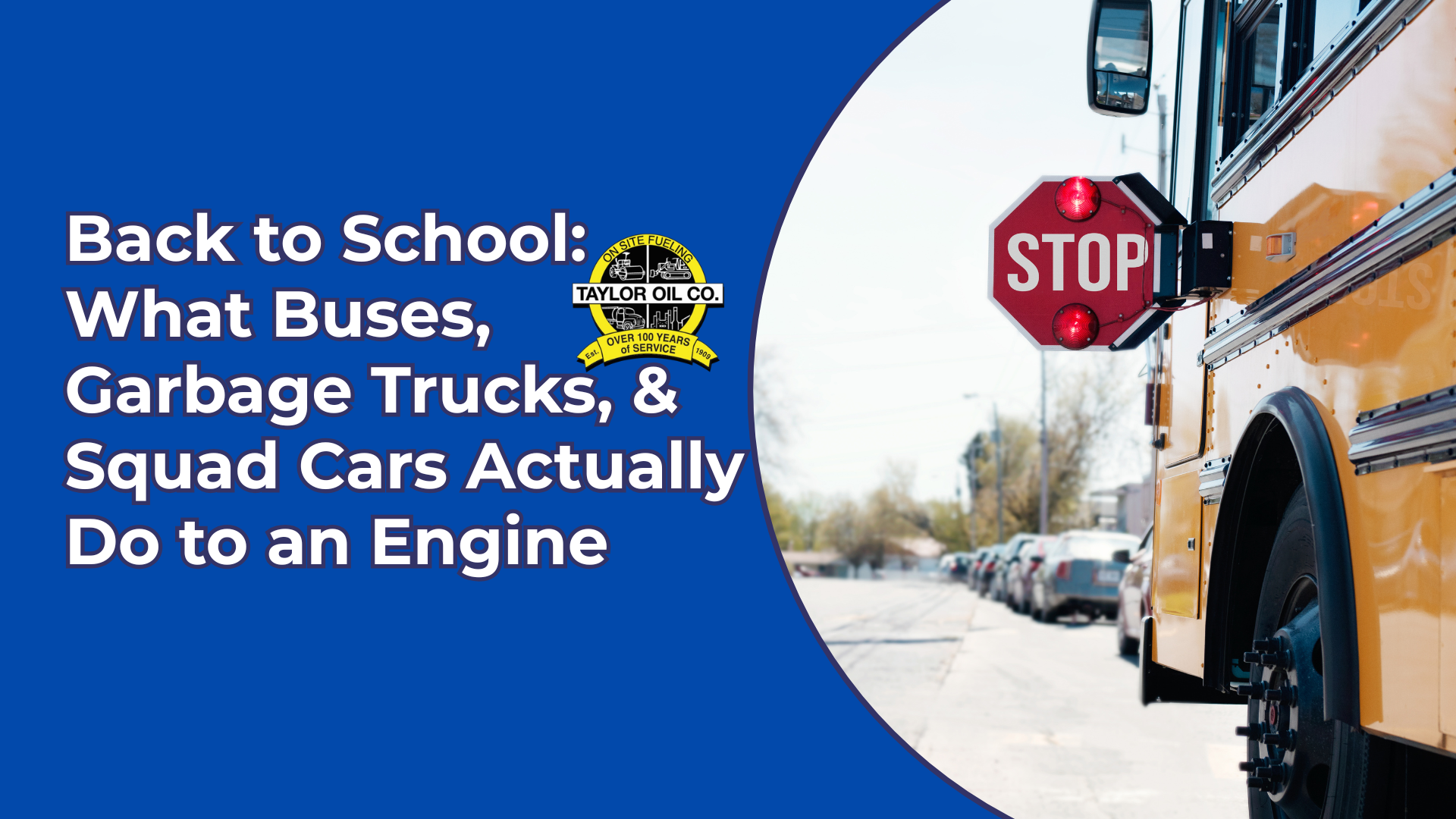
Back to School: What Buses, Garbage Trucks, and Squad Cars Actually Do to an Engine

September sees school buses roll again, and for most people that means the end of summer and a return to routine. This edition of The Fuel Focus looks at what these vehicles actually go through in a normal day, because it's very different from what most engine oils and drivetrain fluids are designed around. Buses, garbage trucks, police cruisers, and fire trucks spend most of their working hours doing three things: sitting still with the engine running, starting cold, and covering short distances between stops. A tractor-trailer running interstate freight holds a steady speed and temperature for hours at a stretch. None of these municipal vehicles get that. A bus route is pickup, idle, short hop, idle again. A garbage truck idles at the curb, compacts a load, moves fifty feet, and idles again. Police and fire vehicles often run the engine for lights, radios, or climate control long after the vehicle has stopped moving. That is a lot of engine hours without much heat and little sustained load, and manufacturers classify it as severe service even though nothing about it looks extreme on the surface. Why short trips impact engines more than you'd think Oil needs time at [...]

Back to School: What Buses, Garbage Trucks, and Squad Cars Actually Do to an Engine2026-08-13T09:56:25-05:00

Timely Lubrication for Equipment

In the ever-competitive world, companies are always on the lookout for ways to trim their operating costs. Lower expenses not only give you a competitive edge but also lead to healthier profit margins. One of the key strategies for achieving cost savings in manufacturing is proper equipment maintenance, and a pivotal aspect of this is timely lubrication. When you adhere to a well-planned lubrication schedule, you can significantly reduce costs by mitigating unnecessary friction, corrosion, and costly repairs. In this article, we'll delve into the many benefits of timely lubrication and how it can extend the life of your machines. Corrosion Corrosion, the nemesis of machinery, occurs when your equipment is exposed to oxidation. Left unchecked, corrosion can reshape moving parts and cause detrimental friction. However, the right lubricants act as a protective shield for your machinery, safeguarding essential components from damage. The extent of protection you achieve depends on the type of lubricant used. For instance, petroleum and synthetic oils are invaluable for applications involving rolling chains in high-capacity operations. Petroleum-based lubricants are known for their high melting points, making them capable of withstanding harsh temperatures. This property renders them particularly useful in warm, humid environments where corrosion [...]

Timely Lubrication for Equipment2024-09-09T01:55:02-05:00
Go to Top